
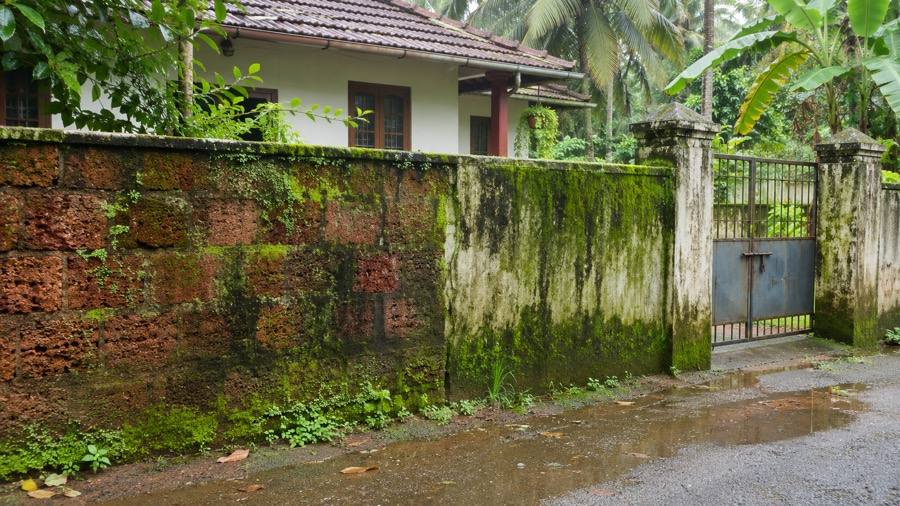
Green or black algae on the compound wall after the rain
Algae grows on walls that stay wet and shaded. Scrub it off, treat it, fix the water splash and run-off, then repaint with an exterior coat that resists it.
This guide is for first checks only. If there is shock, sparks, burning smell, active leakage near wiring, unstable structure or anything you are unsure about, stop and call a qualified professional.
By August, a lot of compound walls in the city have a green band at the bottom and black streaks running down from the top. Customers usually want it painted over before a function. That looks good for one season, and then the green comes back through.
Why this usually happens
Algae and fungus need water, shade and a surface to hold on to. A compound wall gives them all three. Rain soaks a flat top that has no slope or coping. Water splashes up from the ground and keeps the bottom 1 to 2 feet wet. Trees or the next building keep it shaded, so it never dries properly between showers.
The house walls get the same thing under sunshades, around rainwater pipes that overflow, and on the side that rarely gets sun. Black streaks are often algae mixed with dirt carried down from a parapet or sunshade. Plain distemper and cheap exterior paint soak up water and give the growth an easy start.
What we see in Trivandrum homes
With two monsoons, many Trivandrum walls stay damp from June right through to December. Houses in green, shaded areas like Peroorkada, Kowdiar and Nanthancode, and those near the wetland around Akkulam and Veli, see heavy growth. Laterite compound walls with only a thin plaster coat soak up a lot of water, and near the coast the humid, salty air keeps surfaces damp even longer.
What you can check safely
- Look at where the growth is. Bottom only usually means ground splash. Top and streaks mean water running off the wall top or a sunshade.
- Check whether the top of the compound wall slopes, or whether water stands on it after rain.
- Look for blocked or broken rainwater pipes that throw water onto the wall.
- Trim branches that keep the wall in permanent shade, if they are yours to trim.
- On a dry day, scrub a small patch with a stiff brush and water. If it comes off easily, it is surface growth.
- Keep a gap between flower beds or soil and the wall, so the bottom is not wet all the time.
What not to do
- Do not paint directly over algae. It grows back through the new coat.
- Do not mix cleaning chemicals, especially bleach with acids or other cleaners.
- Do not pressure wash old, weak plaster hard. It can strip the plaster along with the algae.
- Do not plan exterior repainting during the monsoon.
When to call Sameway
Sameway cleans and treats the algae, repairs cracks and the wall top, sorts out rainwater pipes that spill onto the wall, and repaints with an exterior coat suited to wet, shaded walls. We schedule this in the dry months so the treatment and paint can cure.
Common questions
Will bleach remove algae from walls?
Diluted bleach can kill surface algae, but it can damage paint and plants and must never be mixed with other cleaners. A proper algae treatment followed by a suitable exterior paint lasts longer.
How soon does algae come back after cleaning?
If the wall stays wet and shaded and is only washed, it can be back within a monsoon. Fixing the water source and using an exterior paint made to resist algae keeps it away much longer.
Want us to check it?
Send a photo or short video on WhatsApp with your area in Trivandrum. We will reply with the safest next step and a clear quote when a visit is needed. Our charges are kept affordable, so it is worth asking before the problem grows.
WhatsApp Sameway