
Banging or knocking sound in water pipes when a tap closes
That bang is water hammer. Fast water stops suddenly at a quick-closing tap or when the pump stops. Loose clamps and a worn non-return valve add to it.
This guide is for first checks only. If there is shock, sparks, burning smell, active leakage near wiring, unstable structure or anything you are unsure about, stop and call a qualified professional.
It is a sharp thud inside the wall when someone shuts the kitchen tap, or a loud knock from the terrace a second after the pump switches off. Some houses have lived with it for years. It is not just noise. Each bang sends a shock through the joints.
Why this usually happens
Water moving through a pipe has weight behind it. When a valve shuts suddenly, the moving water has nowhere to go and slams against it, sending a pressure wave back along the line. That is water hammer. Quarter-turn taps, the solenoid valve in a washing machine and float valves that snap shut all cause it. A pressure pump raises the line pressure, so the bang gets louder.
When the pump stops, the column of water in the delivery pipe can fall back and hit the non-return valve. A worn or sluggish valve makes that knock heavier. Pipes that are not clamped properly then rattle against the wall and carry the noise across the house.
What we see in Trivandrum homes
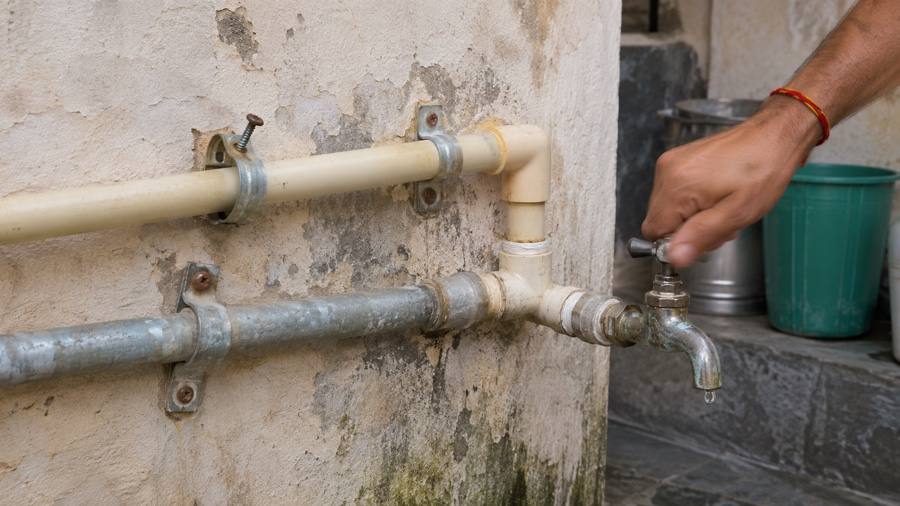
We hear this most in Trivandrum houses with a long delivery pipe up to a high overhead tank, duplexes with a pressure pump for the upstairs bathrooms, and homes where CPVC or GI pipes run along the outside wall with only a few clamps. Pipes on outside walls also expand on hot afternoons and contract at night, and the clamps work loose over the years.
What you can check safely
- Note exactly when the bang happens. After a tap closes, after the washing machine fills, or after the pump stops.
- Close taps slowly for a day. If the noise drops, quick closing is the cause.
- Walk along the exposed pipes on outside walls, the terrace and near the pump. Look for missing or loose clamps and pipes that move when you press them.
- Stand near the pump when it switches off. A loud knock there points to the non-return valve.
- If you have a pressure pump, ask whoever installed it what pressure it is set to. It may be higher than the house needs.
- Check the joints near where the noise seems to come from for any fresh damp.
What not to do
- Do not wedge wood or cloth behind pipes to stop the rattle. It hides the cause.
- Do not ignore a bang that has suddenly got louder. A joint or valve may be failing.
- Do not turn up the pump pressure to fix weak flow at one tap if the pipes already knock.
- Do not open up concealed walls to chase the sound before the exposed pipes and the pump have been checked.
When to call Sameway
Sameway plumbers fix loose pipes with proper clamps, replace worn non-return and float valves, and fit a water hammer arrestor near quick-closing valves where needed. If the pump pressure is set too high, we adjust it to suit the house.
Common questions
Can water hammer damage the pipes?
Yes, over time. The repeated shock loosens joints and fittings, especially in concealed lines, and can lead to leaks inside the wall.
Why do my pipes knock only when the pump stops?
Usually the water in the delivery pipe is falling back against the non-return valve. Replacing a worn valve, or fitting a better one, normally reduces it.
Want us to check it?
Send a photo or short video on WhatsApp with your area in Trivandrum. We will reply with the safest next step and a clear quote when a visit is needed. Our charges are kept affordable, so it is worth asking before the problem grows.
WhatsApp Sameway