
Water stays on the bathroom floor instead of going to the drain
Water pooling away from the drain means a slope problem. Water sitting around the grating means a blocked trap. Clean the trap first. Slope needs tile work.
This guide is for first checks only. If there is shock, sparks, burning smell, active leakage near wiring, unstable structure or anything you are unsure about, stop and call a qualified professional.
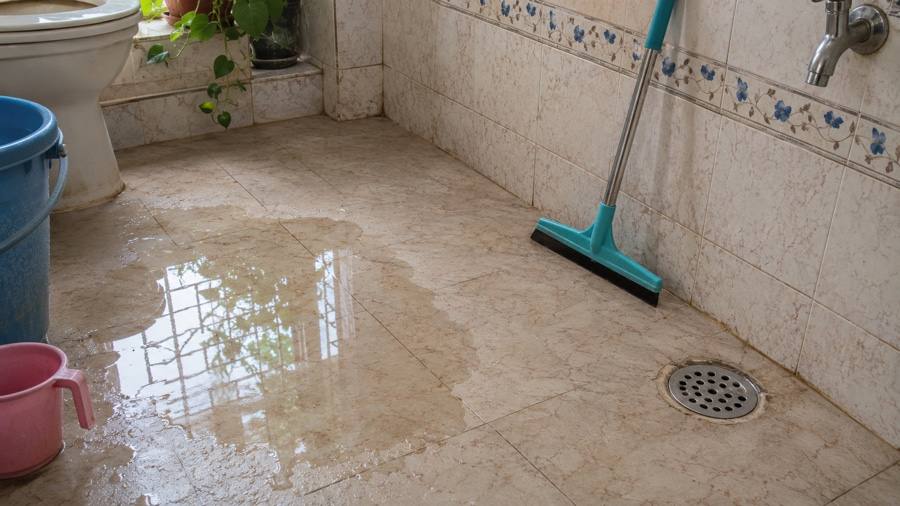
After every bath there is a small pond in one corner, and someone has to push it to the drain with a wiper. Or the water sits right around the grating and goes down very slowly. These are two different problems, and the fix for each is very different.
Why this usually happens
If water collects around the floor trap and drains slowly, the trap or the pipe after it is blocked. Hair, soap scum, bits of shampoo sachets and sand from feet build up in the trap below the grating. In older bathrooms the line from the trap to the outside chamber may also be partly choked, or laid with too little fall.
If water sits in a corner or near the door and never reaches the drain at all, the slope is the problem. Tiles need a gentle fall towards the trap. When a bathroom is re-tiled over an old floor without redoing the bed, or the tiles are set almost flat for looks, water stays where it lands. The bed under the tiles can also settle over the years and leave a low spot.
What we see in Trivandrum homes
In many older Trivandrum homes the bathroom has been re-tiled once or twice over the original floor, which raises the level and flattens the slope. Newer flats sometimes have the opposite problem, a floor that falls towards the bathroom door. During heavy monsoon rain in low-lying parts of the city, a slow bathroom drain can also mean the outside line or chamber is already full.
What you can check safely
- Pour a bucket of water on the floor and watch where it goes. Does it sit around the drain or somewhere else?
- Lift the floor grating and clean out the hair and gunk from the trap below. Wear gloves.
- Pour a bucket straight into the trap. If it backs up or drains slowly, the block is further down the line.
- Check the other drains in the house. If the kitchen and other bathrooms are slow too, the block is in the common line or the outside chamber.
- Put a marble on the dry floor in a few spots. It rolls towards the low points and shows you the real slope.
- Tap the tiles near the pooling area. A hollow sound can mean the bed below has settled.
- Look at the bottom of the bathroom door frame. If water has been running out, wooden frames swell and go soft there first.
What not to do
- Do not pour acid into the floor trap. It eats the grout and the pipe and gives off fumes.
- Do not chip a channel into the tiles to guide water. It cracks the tiles and lets water under the floor.
- Do not ignore water seeping under the tiles. It often shows up later as a damp wall or ceiling nearby.
- Do not lay new tiles over old ones without checking the slope first.
When to call Sameway
Sameway plumbers clear floor traps and drain lines, and where the slope is wrong we relay the tiles in that part of the floor with the right fall towards the drain. A short WhatsApp video of the water after a bath usually tells us which problem it is.
Common questions
Can the bathroom floor slope be fixed without breaking the whole floor?
Sometimes. If the low spot is in one area, only those tiles and the bed under them need to be reset. If the whole floor falls the wrong way, redoing it fully lasts better.
Why does my floor trap smell as well as drain slowly?
A blocked trap often brings drain smell with it, because the water seal does not work properly. Cleaning the trap usually helps both.
Want us to check it?
Send a photo or short video on WhatsApp with your area in Trivandrum. We will reply with the safest next step and a clear quote when a visit is needed. Our charges are kept affordable, so it is worth asking before the problem grows.
WhatsApp Sameway