
How much paint do I need for a room or a full house?
Measure the wall area, subtract doors and windows, multiply by the number of coats, then divide by the coverage printed on the can. Add a little for wastage.
This guide is for first checks only. If there is shock, sparks, burning smell, active leakage near wiring, unstable structure or anything you are unsure about, stop and call a qualified professional.
People often call us after a shop has given them a figure that sounds too high or too low. Paint cannot be guessed well from the floor area of the house. You need the wall area, the number of coats, and the coverage the manufacturer gives for that exact product.
Why this usually happens
Coverage changes from product to product and from surface to surface. A smooth wall that is already painted takes less than fresh plaster, rough exterior texture or an old wall that has just been scraped. Primer, putty and top coat each have their own coverage figure, and a big colour change, light over dark, can need an extra coat.
Most home estimates go wrong in three places. People use the floor area instead of the wall area, forget to count the ceiling or compound wall separately, or assume one coat will do. The coverage on the can is measured in test conditions, so real walls usually take a bit more.
What we see in Trivandrum homes
In Trivandrum, exterior walls often have rough plaster or texture finishes and take two monsoons a year, so painters usually plan for the full number of coats the manufacturer recommends. Older houses with laterite walls and many layers of patched plaster can soak up more primer than expected. Compound walls, sunshades and parapets are often left out of the estimate, and they add up.
What you can check safely
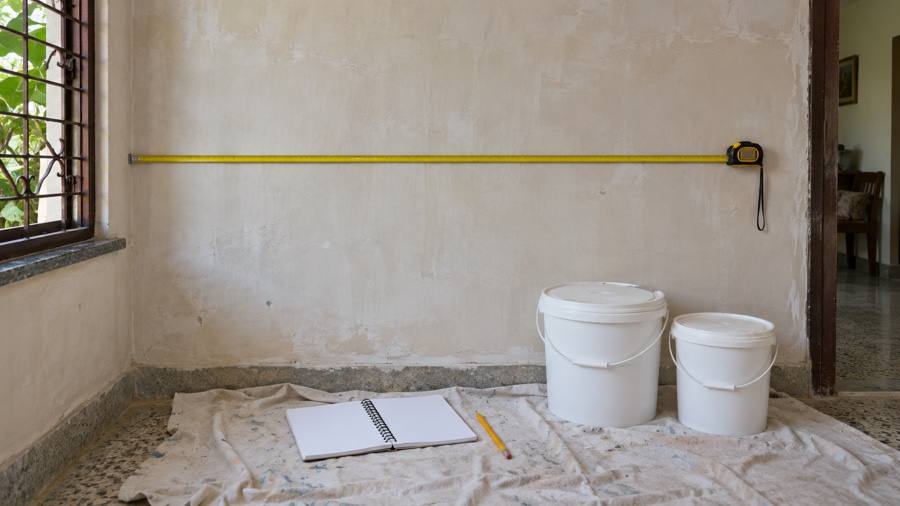
- For each wall, measure the length and height in feet and multiply them. That is the area in square feet. Add up all the walls in the room.
- Measure each door and window and subtract those areas. A typical door is around 7 feet by 3 feet, but measure your own.
- If you are painting the ceiling, work it out separately. Room length times width.
- Multiply the total by the number of coats. Most repaints get two coats of top coat. Primer is usually one coat, but go by what the product says.
- Find the coverage printed on the can or the product sheet for that exact paint, and divide your total area by it. That gives you litres.
- Add a little extra for wastage, touch-ups and rough patches, then round up to the nearest can size.
- For a whole house, go room by room, then the exterior walls, then grills, doors and the compound wall on their own.
What not to do
- Do not estimate wall paint from the floor area.
- Do not use the coverage figure of one product to buy a different one.
- Do not forget primer and putty. They are separate products with their own coverage.
- Do not buy the last few litres from a different batch without checking. The same shade from two batches can look slightly different on a large wall.
When to call Sameway
For a quick check, send us the room sizes or a few photos on WhatsApp. Sameway can measure the house, work out the paint, primer and putty needed for the product you choose, and give a fixed quote for the whole painting job.
Common questions
Is the coverage printed on the paint can accurate?
It is a guide, measured on a smooth, primed surface. Rough plaster, fresh walls and texture finishes usually take more, so keep some margin.
Do grills and doors go into the wall area?
No. Grills, doors and windows take a different paint, usually enamel, and are estimated separately by size and number of coats.
Want us to check it?
Send a photo or short video on WhatsApp with your area in Trivandrum. We will reply with the safest next step and a clear quote when a visit is needed. Our charges are kept affordable, so it is worth asking before the problem grows.
WhatsApp Sameway