
How often should the water tank and sump be cleaned in Kerala?
Clean the overhead tank and sump at least once a year, better twice, before and after the monsoon. Silt, a smell, slime or worms mean it is overdue.
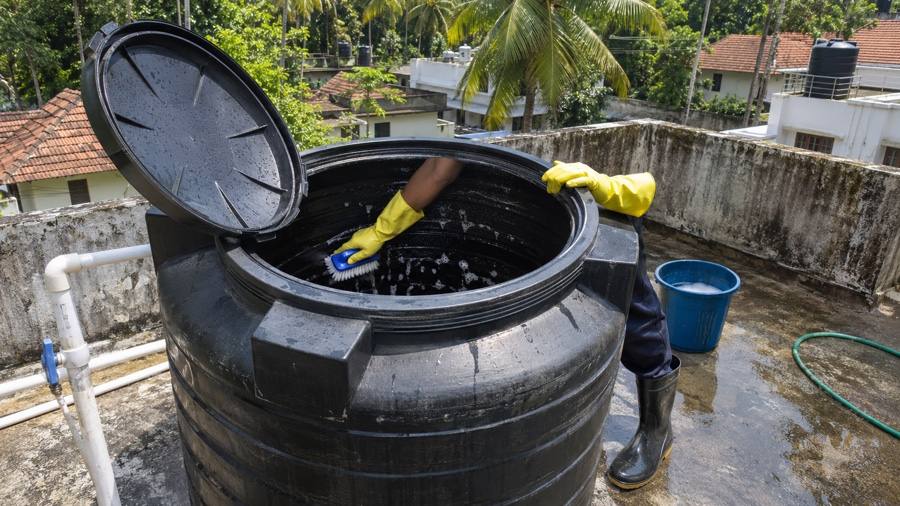
This guide is for first checks only. If there is shock, sparks, burning smell, active leakage near wiring, unstable structure or anything you are unsure about, stop and call a qualified professional.
Most people remember the tank only when something comes out of the tap that should not. A bit of sand in the bucket, a green tinge, a small worm in the bathroom mug. By then the tank has usually gone a year or two without a proper clean.
Why this usually happens
Overhead tanks in Kerala sit in full sun on the terrace for most of the year. Warm water, a little light through a loose lid or a thin plastic wall, and some dust blowing in is enough for algae and slime to grow on the inside walls. Sumps collect silt, leaves and the odd frog or lizard, especially if the lid does not fit well or rainwater can get in from the top.
The supply brings its own sediment too. Well water in laterite areas leaves a reddish layer at the bottom. Water Authority supply can carry fine mud after a pipe burst or repair work in the area, and that settles in the sump first. Mosquitoes breed quickly in any tank where the lid or overflow pipe is open, which matters a lot in the monsoon months.
What we see in Trivandrum homes
In Trivandrum we usually suggest two cleans a year. Once around April or May before the southwest monsoon, and once after the rains ease in December or January. Houses with open wells in places like Nedumangad or Vattappara often have a thick brown layer of iron sludge at the bottom of the tank. Homes in low-lying city areas that waterlog after heavy rain should check the sump soon after any flooding, because dirty water can get in through the lid or cracks.
What you can check safely
- Think back to the last clean. If nobody at home remembers, it is overdue.
- Fill a white bucket from a tap and let it stand for ten minutes. Sand, reddish silt or a yellow tint at the bottom tells you what is sitting in the tank.
- Run a finger inside a tap outlet or shower head. A slimy feel usually means growth inside the tank.
- Check the lids. Overhead tank and sump covers should sit firm, with no gap big enough for rats, birds or rainwater.
- Look at the overflow and vent pipes. They need a mesh cover so mosquitoes cannot get in.
- Smell the first water from a tap in the morning, after it has been standing overnight.
- For the sump, look for cracks on the top slab. The top should be a few inches higher than the ground around it so surface water cannot run in.
What not to do
- Do not climb into a sump or closed tank yourself. The air inside can be poor and the floor is slippery.
- Do not pour bleaching powder or chemicals into the tank by guesswork. Too much is harmful and too little does nothing.
- Do not scrub plastic tanks with a wire brush. Scratches give algae a place to hold on.
- Do not drink the first water after cleaning until the tank has been rinsed out and refilled.
When to call Sameway
Sameway plumbers can clean the overhead tank and sump, scrape out silt, rinse and refill, and fix loose lids, missing mesh or a cracked sump slab on the same visit. If the tank itself is old and leaking, we will tell you before you pay for cleaning.
Common questions
Is cleaning the water tank once a year enough?
For many houses, yes, if the lid fits well and the supply is clean. Homes with iron in the well water, or a sump that takes in dust or rainwater, do better with two cleans a year.
How long will we be without water during tank cleaning?
Plan for a few hours without water from that tank, and store some buckets before work starts. The time depends on tank size, access and how much silt is inside.
Want us to check it?
Send a photo or short video on WhatsApp with your area in Trivandrum. We will reply with the safest next step and a clear quote when a visit is needed. Our charges are kept affordable, so it is worth asking before the problem grows.
WhatsApp Sameway