
Kitchen or bathroom exhaust fan not working or very noisy
Grease, dust, dry bearings, a weak capacitor or a damp connection are the usual causes. Clean it with power off. Replace it if the motor hums or noise stays.
This guide is for first checks only. If there is shock, sparks, burning smell, active leakage near wiring, unstable structure or anything you are unsure about, stop and call a qualified professional.
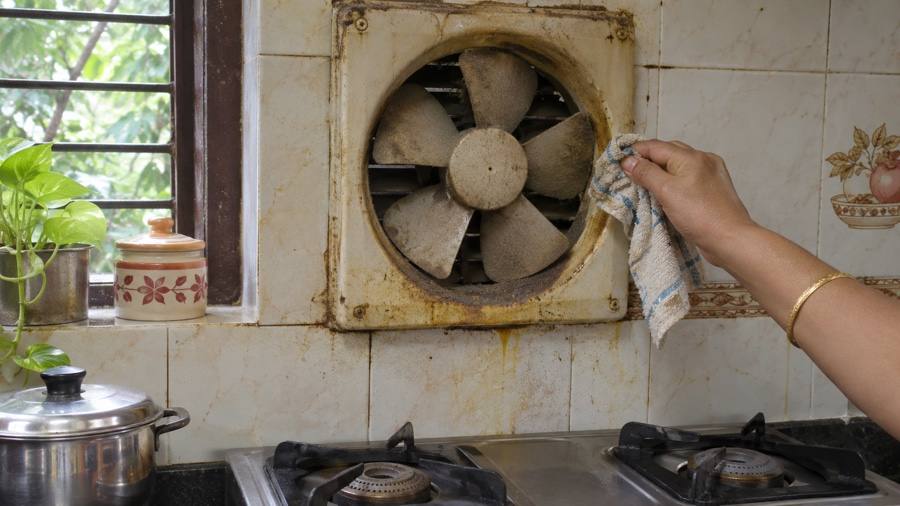
The exhaust fan is the one thing nobody cleans until it stops. In kitchens it gets a coat of oil and dust. In bathrooms it sits in steam every day. By the time people call, it is dead, spinning very slowly, or rattling loud enough to hear from the hall.
Why this usually happens
In kitchens, oil and smoke settle on the blades and motor, and dust sticks to that layer. The blade gets heavy and out of balance, the motor works harder, and the bearings dry out. That is the grinding or rattling sound. In bathrooms, steam and humidity rust the shaft and frame, and moisture gets into the switch or the connection behind the fan.
Some exhaust fans also use a small capacitor. When it weakens, the fan hums but will not spin, or needs a push to start. Fans fitted into a glass window slot or a thin wall opening also vibrate loose over time. During the monsoon, a fan on an outside wall can let rain in through the louvres and wet the connection.
What we see in Trivandrum homes
In Trivandrum kitchens, with daily frying and tempering in coconut oil, an exhaust fan can build up a thick layer of grease within a few months. Bathrooms in older houses often have no window and only the exhaust fan for air, so a dead fan quickly means black mould on the ceiling. Near the coast at Vizhinjam and Shanghumugham, the metal parts rust faster in the salt air.
What you can check safely
- Switch off the fan and the MCB for that area before going near it. If you are not sure which MCB, leave it for the electrician.
- With the power off, turn the blade gently by hand. Stiff or grinding means the bearings are dry or worn.
- Look at the blades and grill. A thick sticky layer means it needs a proper clean.
- If the grill or blade comes off without tools, wipe it with warm soapy water and dry it fully. Keep water away from the motor.
- Check if the fan frame is loose in the wall or window slot. Rattling often comes from the frame, not the motor.
- Switch it on after cleaning. If it hums but does not start, or starts only with a push, the capacitor or motor is likely gone.
- For a bathroom fan, see whether the switch outside the bathroom feels damp or warm. A bad switch can stop the fan too.
What not to do
- Do not spray water or cleaner into the fan motor or the switch.
- Do not stand on a wet bathroom floor or a wobbly stool to reach the fan.
- Do not keep running a fan that smells hot or hums without spinning.
- Do not stuff cloth or paper into the outside louvres to stop monsoon rain. Get the opening sealed properly.
When to call Sameway
Sameway electricians can clean and service the fan, replace the capacitor, or fit a new exhaust fan of the right size, and check the switch and wiring behind it. If the opening lets in rain or the frame is loose, we can reseal and refit it on the same visit.
Common questions
Should I repair an old exhaust fan or replace it?
If the bearings are gone or the motor is burnt, replacing a small exhaust fan is usually more sensible. If it is only dirty or needs a capacitor, a service is enough.
How often should a kitchen exhaust fan be cleaned?
Every two to three months in a kitchen with daily frying. A bathroom fan needs a wipe every few months and a quick check before the monsoon.
Want us to check it?
Send a photo or short video on WhatsApp with your area in Trivandrum. We will reply with the safest next step and a clear quote when a visit is needed. Our charges are kept affordable, so it is worth asking before the problem grows.
WhatsApp Sameway